

Price Plan
Prices Per Person
| Person | Price |
|---|---|
| 1 Person | USD 180 |
| 2 – 3 Person | USD 130 |
| 4 – 7 Person | USD 95 |
| 8 – 15 Person | USD 75 |
Discover Luxor in a Day: Unforgettable Tour Highlights
Begin your Luxor day tour with a visit to the legendary Valley of the Kings, where you’ll step inside the ancient tombs of Egypt’s pharaohs and marvel at their colorful wall paintings. Next, discover the breathtaking Hatshepsut Temple, an architectural wonder built into the cliffs, and learn about the powerful queen who ruled Egypt. After a delicious lunch at a local restaurant, continue to the East Bank to explore the grand Karnak Temple, famous for its massive columns and sacred lake, and end your journey at the elegant Luxor Temple, beautifully lit as the sun sets. This tour is perfect for history lovers and anyone wanting to experience the magic of Luxor in one unforgettable day
Luxor Full-Day Tour: West And East Banks With Lunch
- Hotel Pickup: Your day begins with a warm greeting from your expert guide at your hotel, ensuring a smooth and comfortable start to your adventure.
- Valley of the Kings: Travel to Luxor’s West Bank and step into the legendary Valley of the Kings. Explore several stunning tombs, marvel at the colorful hieroglyphics, and learn fascinating stories about Egypt’s famous pharaohs.
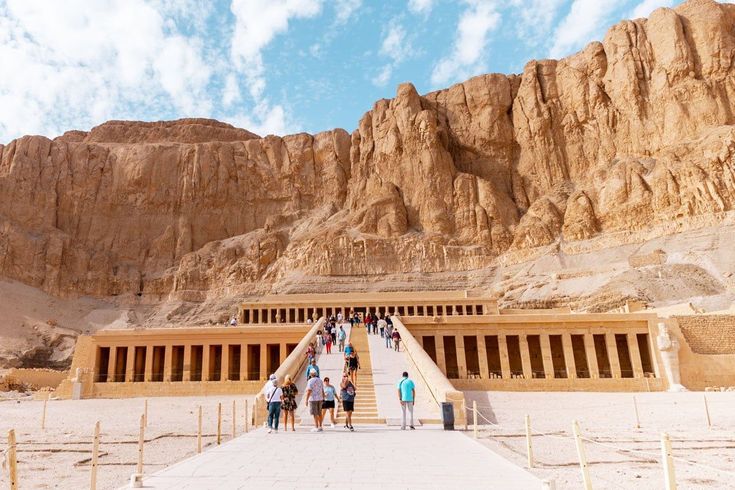
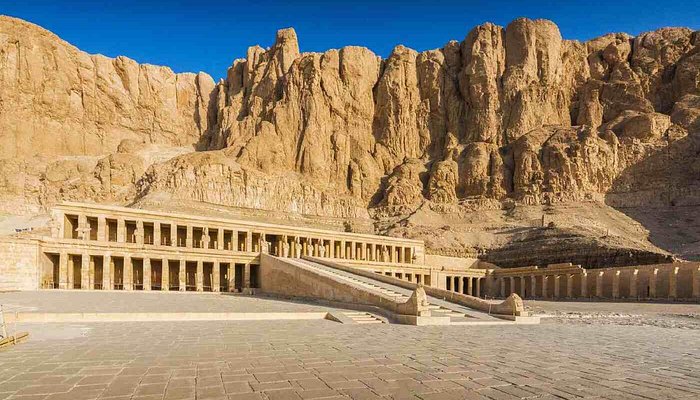
- Temple of Hatshepsut: Next, visit the impressive Temple of Hatshepsut at Deir El-Bahari. Hear about the inspiring life of Egypt’s powerful female ruler as you wander through her beautifully designed temple.
- Colossi of Memnon: Stop for photos at the towering Colossi of Memnon, two massive statues that have stood guard for thousands of years.
- Lunch Break: Enjoy a delicious local lunch at a nearby restaurant, giving you a chance to relax and recharge.
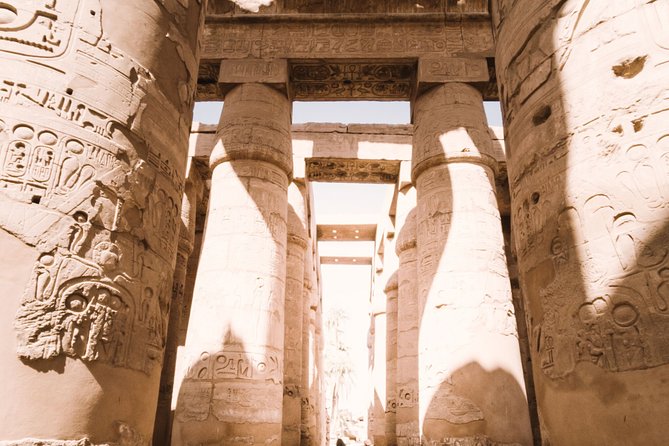
- East Bank Highlights: Cross the Nile to the East Bank and visit the magnificent Karnak Temple, one of the largest temple complexes in the world. Stroll through its grand halls and towering columns.
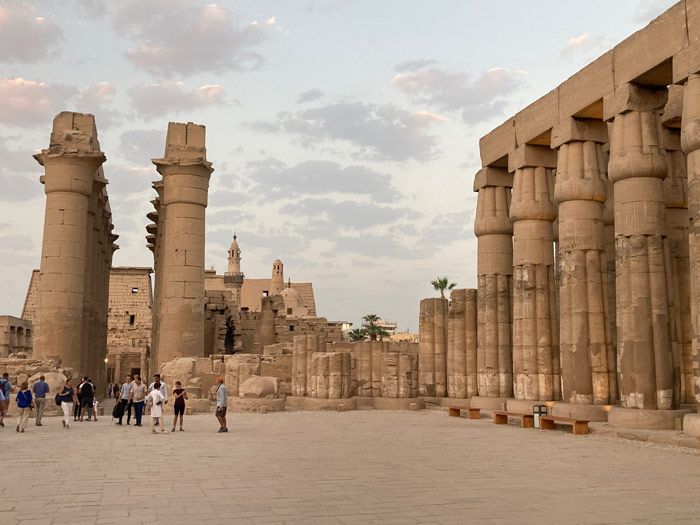
- Luxor Temple: End your tour with a visit to the elegant Luxor Temple, beautifully lit in the late afternoon. Take in the atmosphere and snap some memorable photos.
- Hotel Drop-off: Your guide will return you to your hotel, leaving you with wonderful memories of your day in Luxor!
Feel free to add or adjust activities to suit your guests and make your itinerary even more welcoming!
Your guide will meet you at the reception of your hotel to commence your Luxor day tour to:
The Valley of the Kings:
The Valley of the Kings is one of the most important highlights of the development of the construction of tomb in Egypt. It was called by the Ancient Egyptians (Ta-Maat) or the place of justice and truth. It is a long, narrow defile on the west bank of Luxor, which was part of ancient Thebes. It was the burial site of almost all the pharaohs of the New Kingdom (1550-1080 BC). The plan of the tombs varies considerably but consists essentially of a descending corridor interrupted by deep shafts to baffle robbers and by pillared chambers or vestibules. At the farther end of the corridor is a burial chamber with a stone sarcophagus in which the royal mummy was laid and store chambers around which furniture and equipment were stacked for the king’s use in the underworld. In many cases, the walls were covered with sculptured and painted scenes depicting the dead king in the presence of deities, especially the gods of the underworld, and with illustrated magical texts similar to those found in funerary papyri, designed to help him on his journey through the Netherworld.
With Egypt Nile Travel, you will just visit three of the open ones, and your guide will recommend the best three tombs to visit.
Hatshepsut’s temple:
The temple of Hatshepsut at El Deir El Bahary is unique among the Egyptian temples. It is built in three terraces to commemorate the coronation of Hatshepsut. Hatshepsut’s famous expedition to the land of Punt (Somalia) is depicted on the second terrace. Hatshepsut is the daughter of Thutmosis I, the sister-wife of Thutmosis II, and the mother-in-law of Thutmosis III. She ruled Egypt around 1478 BC for 20-25 years and died naturally from diabetes. The temple is now called Al Deir El Bahary, which means in English (the northern monastery), because the temple was used by the Christians for a while. It is a really amazing temple, you will like and enjoy it. Discover when you visit the Luxor attraction.
The Colossi of Memnon:
You will finish or start your tour with a photo stop at the Colossi of Memnon, two impressive statues (18 meters) high, left from a huge temple built by Amenhotep. They are now called Memnon, after the name of Agamemnon, when the statues were making sounds created when the wind blew through the cracks of the statues at dawn. Take your lunch at a local restaurant.
The Karnak Temple:
The Karnak temple complex is the largest religious complex ever built in the world. The “Karnak” is the Arabic for “the fort” or “the protected area” but the complex was known as ” pr _ Imn” or” the house of Amon” for the ancient Egyptians, after that the name was changed by the Greeks to “ipt _ swt” or “the northern thrones”. The complex was dedicated to the god Imn,” the hidden “, who was just a little, unknown local deity. When Luxor became the capital of Egypt, the god’s importance was increased. He then became like a national god. He was the creator, the sustainer, and the lord of the gods. His consort was the goddess Mut. The couple adopted the god Khonsu, the moon god.
Luxor Temple:
Luxor Temple is situated in the downtown of Luxor. It bears the name of the city al-Luxor or “the palaces”. It is very small compared to Karnak, but it is complete. This temple was dedicated to the consort of Amon, the goddess Mut, so it was the place of the harem of Amon. The two temples, Karnak and Luxor, are linked by Sphinx Avenue.
Price Includes
Includes
- Hotel pick up and drop off
- Entrance fees of all sites of the tour
- Licensed Egyptologist tour guide
- Lunch at a local restaurant
- All service charges and local taxes
Excludes
- Travel insurance
- Gratuities
- Drinks and personal expenses
- Tombs of Seti I and Tutankhamen at the Kings Valley